

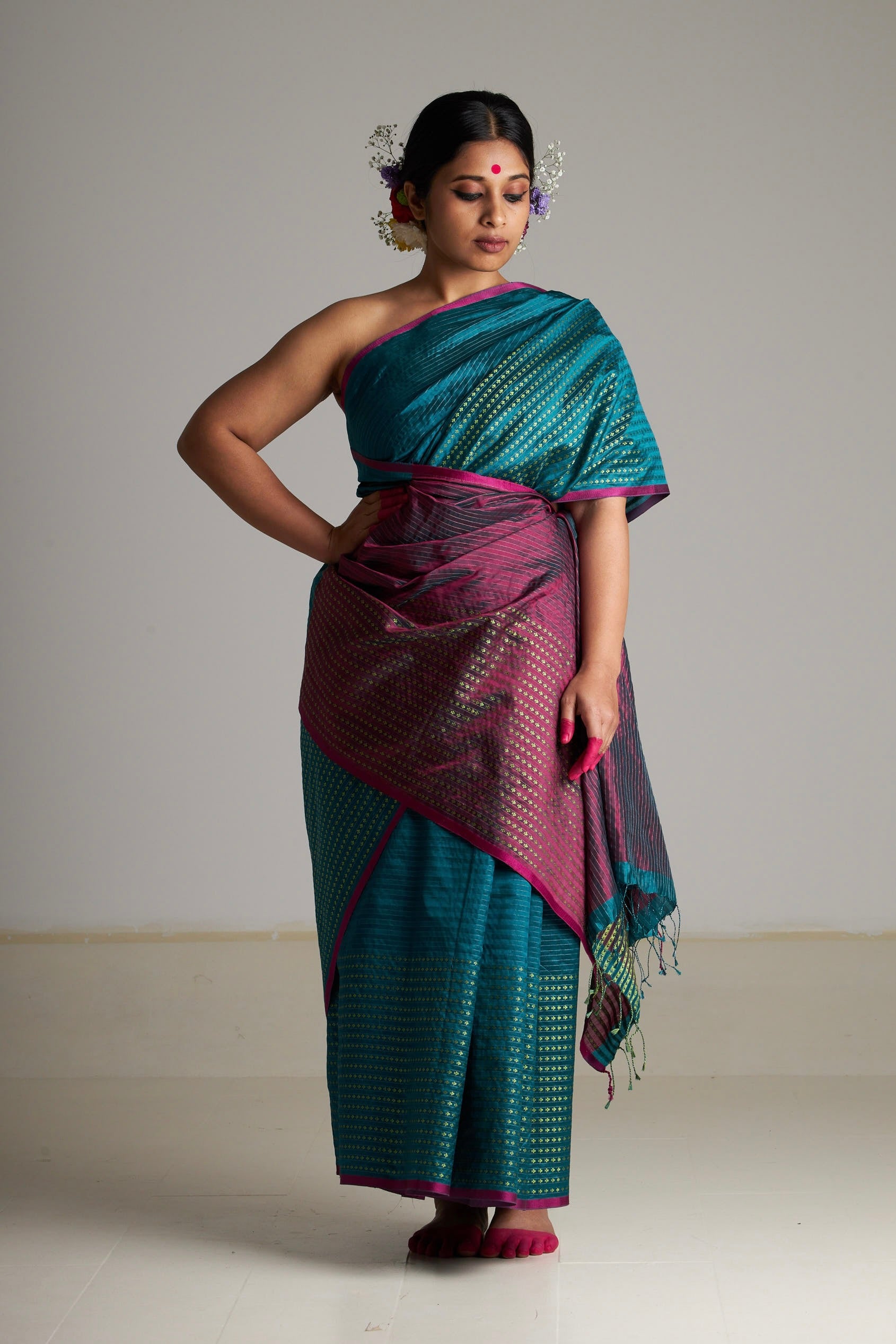
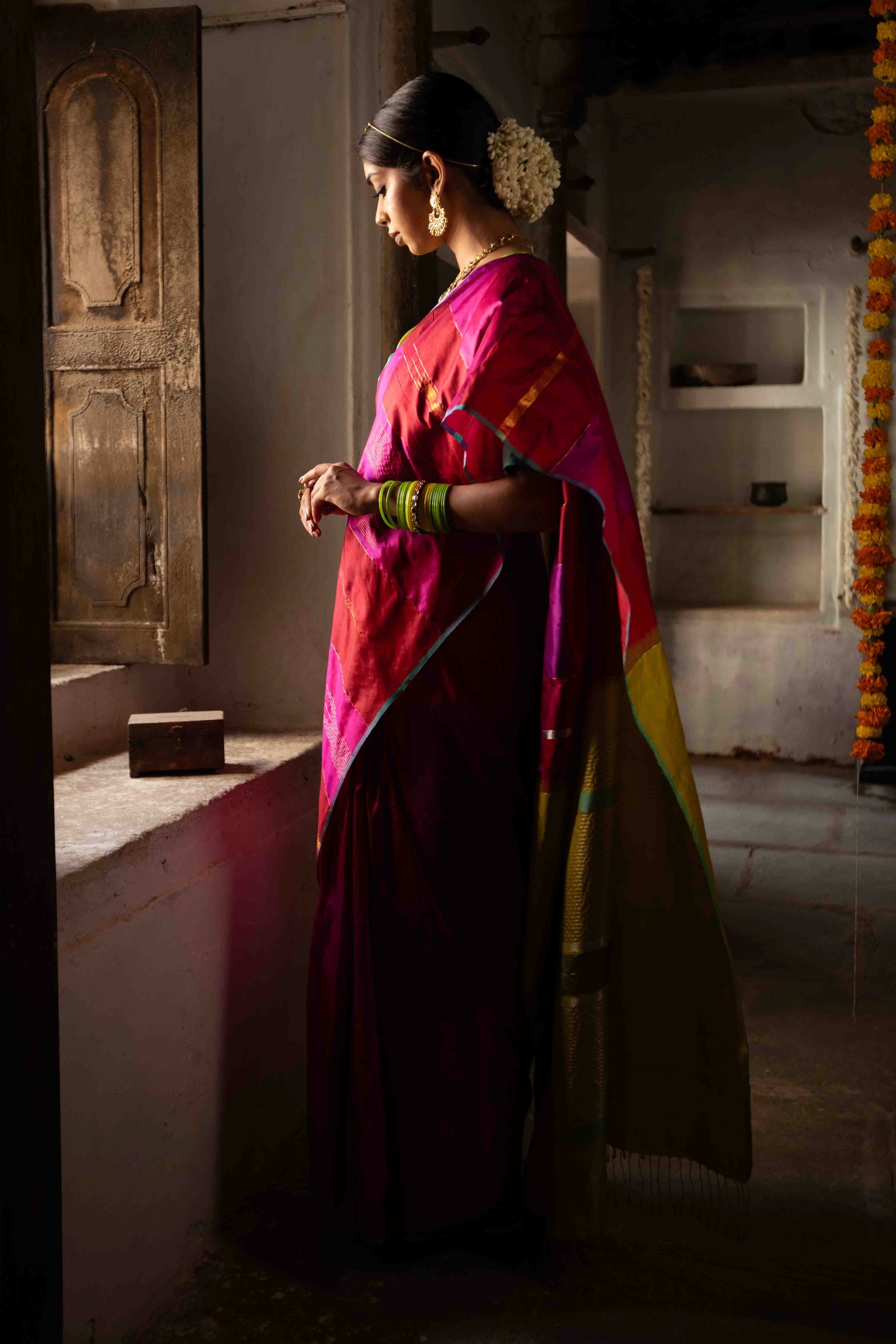
Article: The Journey of Khana and the birth of Kubsa, the brand.
The Journey of Khana and the birth of Kubsa, the brand.
As I trace the path that led to the birth of Kubsa, I find myself revisiting not just the milestones of building a brand, but the journey that brought me back to my roots — as a textile designer from north Karnataka. Kubsa is as much a reflection and a tribute to my roots as it is a celebration of Khana, a fabric steeped in tradition and meaning.
Khana was always a familiar textile growing up in north Karnataka. My grandmother and my older aunts wore them with beautiful Ilkal sarees. It was just something I saw, never something I truly understood—until 2009. That year, I stepped into Guledgudda for the first time, as a young textile designer on a project that unfortunately never materialized. But what I found in that village stayed with me forever.
As I wandered through its narrow lanes, the sound of handlooms filled the air — a gentle,
rhythmic music. Peeking into the skylit homes, through beautifully carved wooden windows, I saw
the magic unfold. On small pit looms, weavers crafted the most exquisite Khana fabric —
just 30 inches wide yet glowing like brocade with silk and chamka (art silk), while the deeper indigo and black cotton weft created a dark ground so the silk motifs could shine.
At that moment, I knew this textile had untapped potential, waiting for the world to take notice!

Fast forward to 2015. I returned to Guledgudda, only to find the
once-familiar handloom music being further drowned out by the harsh clatter of power looms. By 2018, the handlooms had almost vanished entirely. The urgency was real—this fabric, this heritage, this skill set was slipping away. Something had to be done.That’s how Kubsa was born.

In 2019, I found myself sitting in a nearly defunct handloom weavers’ cooperative society in Guledgudda, trying to reignite a spark. Believe me I did not think it through. There was no business plan, no money or funding to go on this journey.
There was no organisation, no designers or the government working in this region to develop this cluster. But I was determined and led by passion for this craft. The back and beyond of Karnataka seemed to be existing, but invisible to the world.
Out of the 25 attendees, many of whom had long abandoned weaving,
only two were willing to experiment on the loom with me. And of those two, just one was brave enough to take on the challenge: weaving the first-ever handloom Khana saree.
The transformation of Khana from a 30-inch blouse fabric to a full 48-inch saree was nothing short of exhilarating. We faced hurdles at every turn—finding the right yarns, convincing the weaver to work with pure silk and cotton instead of the synthetic fibers that seemed more familiar to them, and most importantly, building trust.
Seen here, our weaver and me through one of our many exchanges during the weaving of our first Khana saree.

But after countless trials, it finally happened.
The first-ever handloom Khana saree was born—a classic black and silver textile adorned with the traditional chota hardi motif, inspired by jujube berry seeds and cloves. We call this Laxmi saree, named aptly after the weaver’s daughter.
In image, Laxmi saree - the first handwoven Khana saree in monochrome with traditional chota hardi motif.

With Laxmi, Kubsa had found its rhythm. Our first collection, Nurita, was unlike anything seen before in this textile craft. Traditionally, this textile was all about bright, contrasting colors on a dark ground. But I was drawn to a different vision —monochromes, bold solid borders, that created an irrevocable focus on the intricately patterned body.
The transition wasn’t easy. By now, three weavers had joined Kubsa, but each had to relearn weaving with pure silk and cotton, skills that had faded over decades of working with art silk and polyester. The learning curve was steep, and defected pieces were plenty. Our first year was dedicated to unlearning and relearning, which meant we couldn’t even launch our first collection Nurita until late 2019.
But why go through all this effort to turn a blouse fabric into a saree?
Because preserving Khana wasn’t just about nostalgia. It was about giving this textile a future. By evolving it from a supporting fabric to a statement piece, we added value, longevity, and purpose. The Khana saree was no longer just a regional tradition, it was an heirloom in the making.
Today, every time I see a Khana saree draped with pride, I think back to that first visit to Guledgudda—the sound of handlooms, the gleam of silk under the weaver’s fingers, and the quiet determination of a craft refusing to fade.
Kubsa is more than a label. It’s a promise—to keep the weave alive, one saree at a time.
With gratitude,
Geeta Patil,
Founder kubsa